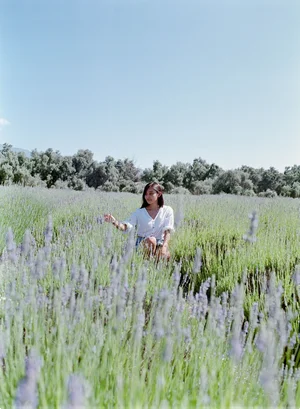
For The Analog Enthusiast
Influential & Inspiring People
The IIP Series, also known as the Influential and Inspiring People Series, was created to showcase the many talented, hardworking, and innovative individuals I have had the privilege of knowing. I want to be able to share their stories while inspiring others to build their own paths along the way. Many of them are making an impact in this world through their passions, and I want their stories to be heard. This one is for the Analog Enthusiast.
Rafael Hernandez
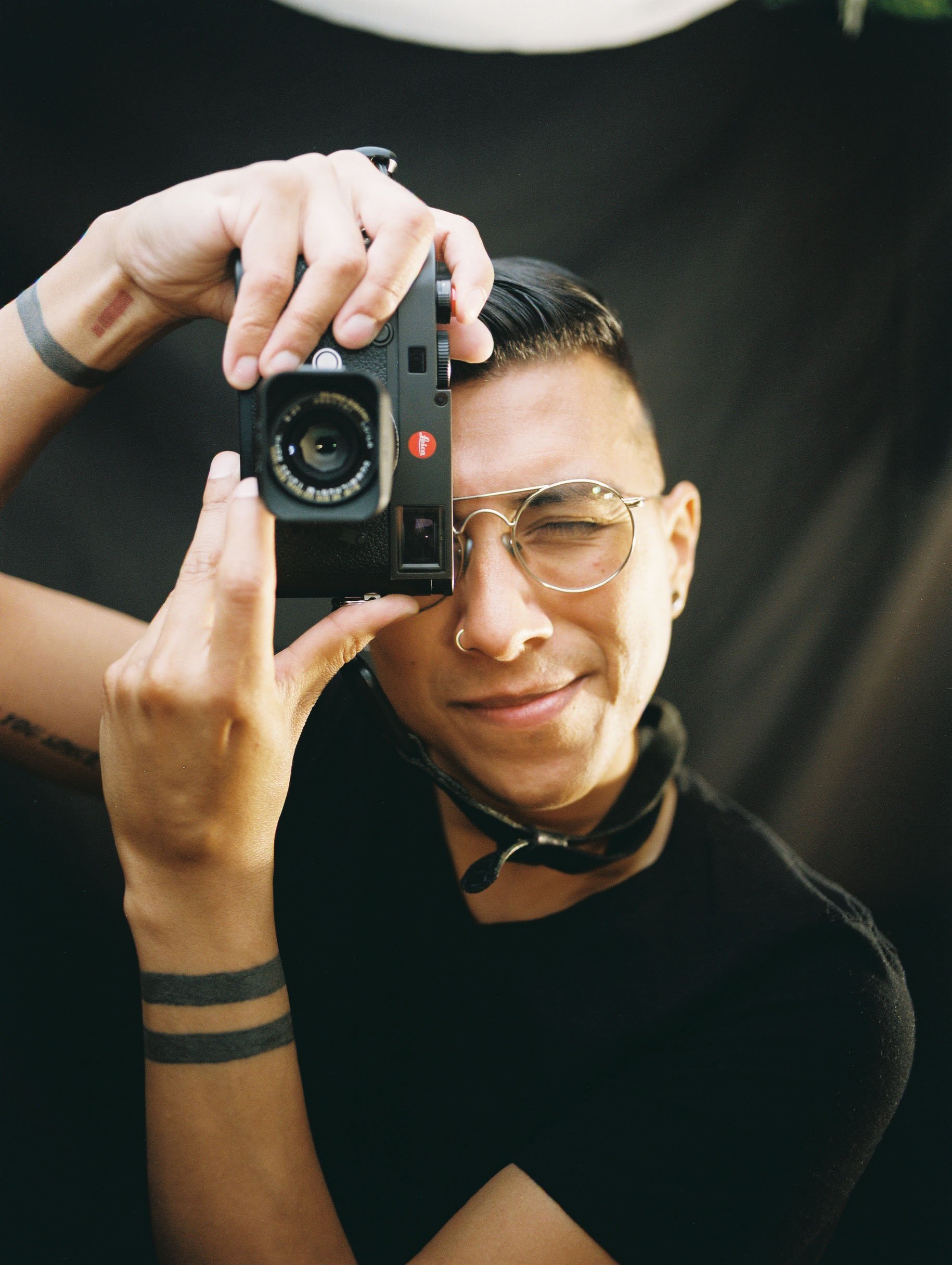
I first started working for Rafael as his photo assistant at California Institute of the Arts back when I was still a student there. From my second year until after I graduated, he took me under his wing and taught me the ins and outs of both film and digital photography. As a dance major, I felt incredibly lucky to have been given this opportunity to study photography without having to switch fields of study, as double majors weren’t an option due to the rigorous curricula each major consisted of. I was able to be immersed in both worlds while gaining a photography mentor and a life-long friend. From learning to develop film in the darkroom for the first time to using the enlarger to make prints for my first photo gallery, Rafael imparted his knowledge to me always with such enthusiasm and willingness to share.
Some of my greatest memories with Rafael as my boss were photographing performances and events together, learning the workflow for editing and uploading thousands of photos to the institute website. However, my fondest memories with him were always when we ventured outside of campus, attending photo walks all over Los Angeles, getting a group of dancers together to photograph at places like the Getty Museum (which we ended up getting kicked out of), and impromptu studio sessions learning about lighting and backdrops for portraiture. I’ve even had the privilege of inheriting the beloved Hasselblad 500c/m medium format camera from him. For those of you who don’t know, the Hasselblad cameras were taken up to the moon by NASA during many Apollo missions.
Since meeting Rafael and seeing the many ways in which he has grown as a person in both photography and in life, he continues to inspire me, along with many other students, with the way in which he views the world through the lens, his strong work ethic, and his continued dedication to education. Rafael continues to work for CalArts as the Institute Photographer and Visiting Faculty. He is a true force to be reckoned with. I introduce you to Rafael.
How did you get started with photography?
I got started in photography through my older brother. He took a high school photo class with the same teacher that I went to learn from when I started high school. One day he asked me to hold down the shutter button for him, he was shooting black and white film. I didn’t get to see what the photo looked like and I didn’t understand what he was doing. He was doing long exposure but essentially because it was a dark room he was turning on a flashlight and doing multiple exposure.
A few days later he comes home with the print… and I was like what. He explained to me what had happened.
Photo taking to me up until that point was family photos and things like that. I was in the fifth grade so I was ten years old when this happened. I just wanted to learn more.
After that, I picked up disposable cameras and point-and-shoot cameras; I shot through eighth and ninth grade up until I got to 10th grade when is when I started photo class… and the rest is history. That’s when the bug bit me - when I was ten. After that, I just wanted to learn.
How did you learn about photography?
Back then, all I had was photo class, which was sixth period. They offered it at my high school. My high school photo teacher taught black and white darkroom. We would print and develop our own film. She graduated from CalArts which is how I found out about CalArts, it was through her. So, I had her class and sometimes I would ditch a different class to go to her for two periods. Then I would have more time to print. I was very invested. When she saw how much I was dedicated to it she told me about CAP. It was the Saturday class at CalArts. I would spend from 10am - 4pm in the lab. It would be Monday through Friday at high school and then Satudday at CalArts and I did that for three years. I was always printing and shooting, and even on the Sunday that I had off I would be taking photos with my friends. It was the social life that I had in high school and I still have all those negatives. My version of binging was just taking whatever class was offered to me and talking to whoever would talk to me about it.
The technical understanding of photography with the way it was written for the two generations prior to me, I didn’t understand the way they talked about it. I had to learn it by doing it, so I had to make a lot of mistakes to learn what not to do and that was kind of the best teacher (trial and error.)
I didn’t start shooting digital until my senior year of high school. I resisted it. I didn’t want to do it, but then I joined yearbook and said I had to do digital. When I started to do digital, I started to see the mistakes I was making, faster and it allowed me to correct them. At the end of the day I didn’t treat it as “this is film and this is digital,” I just treated it all as photography. “What I do here effects what I do there.”
What was that period like after college, before you found a job?
Graduating in 2011 was really rough because we were in the middle of a recession. Jobs weren’t a thing; I couldn’t find a job to save my life. After a year of that, it wore me down a lot. I thought, “If I can’t get a job, then I just have to freelance.” I have to learn how to build a network and put myself out there to get hired for things. The thing that I hung on to was my work ethic. As far as when I photograph something, I like to get it out as fast as possible, not because I want to be done with it, but because I know how happy people are to receive a product that’s fast and can deliver it with good quality, of course.
That’s what got word of mouth going, and I got more clients that way. It was a slow start. It got better over the last two years. By the time that I was getting ready to start working at CalArts, I was constantly doing gigs, but it was inconsistent pay. At the time, I was getting experience and meeting new people, so it was a good thing, but I wanted something a little more consistent, so when I got the job at CalArts, it was perfect timing. Being back in a creative space was really nice. I feel like I didn’t make any creative work while I was away. I missed it.
Once you became an Institute Photographer and started teaching, what interested you in the educational aspect of photography?
When I was doing my undergrad at CalArts, because I had been involved as a CAP student, I begged them to let me help teach CAP. They prioritize BFA 3 and 4s and MFA 1 and 2s, so upperclassmen right. They got to teach the CAP classes, and I didn’t even care about the money. I just wanted to do it because I thought it was a fun program to be involved with. They didn’t let me do it in my first year, but they said, ‘Hey, if you teach this class that teaches you how to teach art, then in your second year, we will let you do it.’ I got to be a teaching assistant for three years, and I got to be a student in high school for three years, so I thought it was kind of perfect. When I was done with that, I missed it. I had a lot of people still asking me what camera they should get. I would give advice; I don’t mind sharing, but it didn’t feel the same as somebody who truly wants to learn how to do what you do and has all the questions to ask you. To me, teaching was far more rewarding than anything I have done photographically. I feel more like a teacher than I do an artist who needs to make work. I enjoy making photographs, but I feel like it’s not a priority of mine. I think it got mixed up somewhere because I do it for work. I do it for a living, and then I make my own work. It doesn’t feel too different sometimes, but what feels like a different experience together is teaching. The other thing that I realized more recently was that the people that I’ve looked up to the most and the biggest role models in my life throughout, from where I started to now, were teachers. My photography teachers impacted me the most, and I look up to them so much that I want to be like them.
What do you like to photograph/ document?
Before I had my job and I was a student, I essentially photographed the same thing that I’m getting paid to do now, which is other artists doing what they love to do. It’s documenting and not just the moments of performance, but I used to hang out with my friends in their studios and just photograph them because I like documenting people in my life. I like to document people that I admire as artists and try to capture the love they have for what they do. It’s beautiful, honestly, so that’s what I meant by my personal work gets mixed up with what I get paid to do. It’s a blessing, but it’s also a little weird because I feel like I should do something else for myself.
At the end of the day, my favorite thing to photograph is portraits; I love photographing people. It’s partially because my earliest influence in photography was Richard Avedon, that’s what I was exposed to, and he was an incredible portrait photographer. The other thing is that I like to connect with people through the process of photographing. You are essentially putting up your interpretation of who this person is, but in the process, you are also getting to know them. Even the people that I photograph all the time, I get to know them better every single time. The difference between photographing someone for the first time and then for the tenth time is that in the beginning, they are always throwing poses at you, and then eventually you get to know each other so much that they are just being themselves and catching those moments in between. That’s all that I care about now. The in-between moments where they don’t even know that they are getting photographed.
With teaching, where do you see yourself in five years?
I want to do an MFA because I want to continue to teach at the college level, but I want to do it full-time rather than just part-time. Going back to the beginning of how I started was with the hunger for knowledge, and now that I have it, instead of just using it for myself, I want to share it.
For work, I shoot digitally. For my personal work, I prefer to shoot film when I can. When teaching, I tried the digital route and felt like people weren’t engaged. When I got to mix one passion with another (I was teaching film photography), I don’t know if it’s because they got more engaged alone through the medium or because they saw that I had a passion for it too… it got them excited, and something clicked! It was beautiful and it was the last class that I taught in January 2020; it was medium format and lighting. We were outdoors with a few different medium-format cameras. We had strobes, reflectors, and diffusers. It was the most fun I ever had with a class.
I’ve had teachers who you can tell were there for a paycheck, or you can tell that they were figuring it out as they went. Then, there were teachers that were very strict to the syllabus, but when you can just flow with a group of people… that’s multiples of that intimacy you get with a person when you do their portrait, but you are interacting with a class of fifteen or twenty. We get to navigate what we are going to learn or what I’m going to teach as a class.
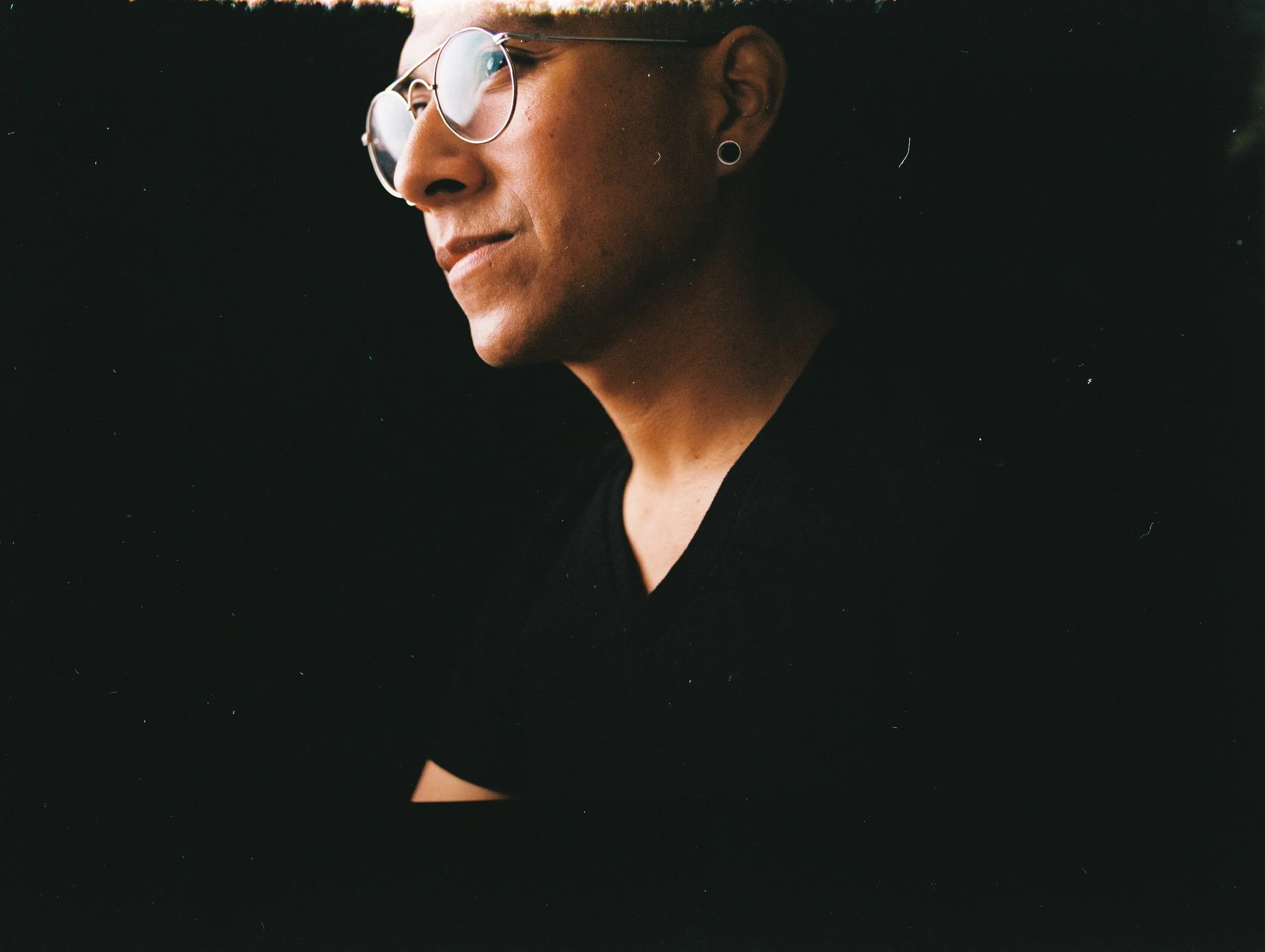
Becoming the photographer that you are, do you feel that CalArts helped you with that, or could you have found a route of being self-taught?
I don’t think I would be where I am without having that experience, but it was mostly because I was around CalArts since high school. It felt like it was always a goal of mine to be there. I only applied there and feel lucky that I got in on my first try. I was seventeen when I started there. It was a big deal to get in and that young of an age because my peers, there were only three or four of them out of high school, and everyone else was older. Back then, it was a big deal to get in when you were that young. Aside from that, the reason I feel like I couldn’t be what I am without art school, specifically at the time, the access to information wasn’t as available as it is now. There are so many websites that you can pay monthly subscriptions to learn things, there’s YouTube that’s free, there are Podcasts, and there are workshops that you can go to that are more frequent than they used to be. I feel like workshops back then were the really big ones that were very expensive and were once a quarter. There was less accessibility of information, which is why I kind of had to go to school for that. Not only that but specifically CalArts - I wanted to pursuit an education and learn about the essence of what is art? What is art in this medium? How do I talk about it, how do I feel about it, and how do I relate to it with other people and other artists?
I feel like if I had gone to a normal school or any other school, I could have learned how to make photos and how to do technical things; you can learn that anywhere. When you want to train as an artist, you do go to an art school. I didn’t want to just be a photographer. I did want to be a photographer with an artist background. I feel like, at the time, it gave me more of an edge. It gives you context. Context is what we didn’t have before because we lacked the knowledge to question things; that’s what art school gives you.
For instance, the thing I see now on the internet: you see somebody take a photo, it blows up, and people try to copy you. You are chasing what other people are doing that’s popular and trendy. From my perspective, there’s no explanation for it. I ask the people that do these things, and they say, “It’s cool, it’s trendy.” There’s no conversation around it. I hear this a lot, “I’m lacking inspiration right now, and I can’t photograph.” Well, they are looking at the same thing over and over again. My suggestion is to read and find a photographer from another era and see how they photograph. Question why there’s a pattern and what that pattern is. Figure out if you want to do something with it, tap into it. You can do it in a different way, but it’s not just the obvious thing.
What is it about film photography now, and why is it back?
Everything from a couple years ago to the early 2000s was going digital, then going digital and being touched up, then there was hyper realism with fantasy mixing because nobody’s skin or body is that perfect. Digital manipulation got to a point where now we are feeling resistant to that because if you don’t touch it, that’s what real life is. Film has a look that’s baked in and you don’t have to touch it; it’s pure. Social media is all pretty and really glamorized, which is not reality. Film is the other end of the spectrum, where you can actually photograph something to really look like it should have.
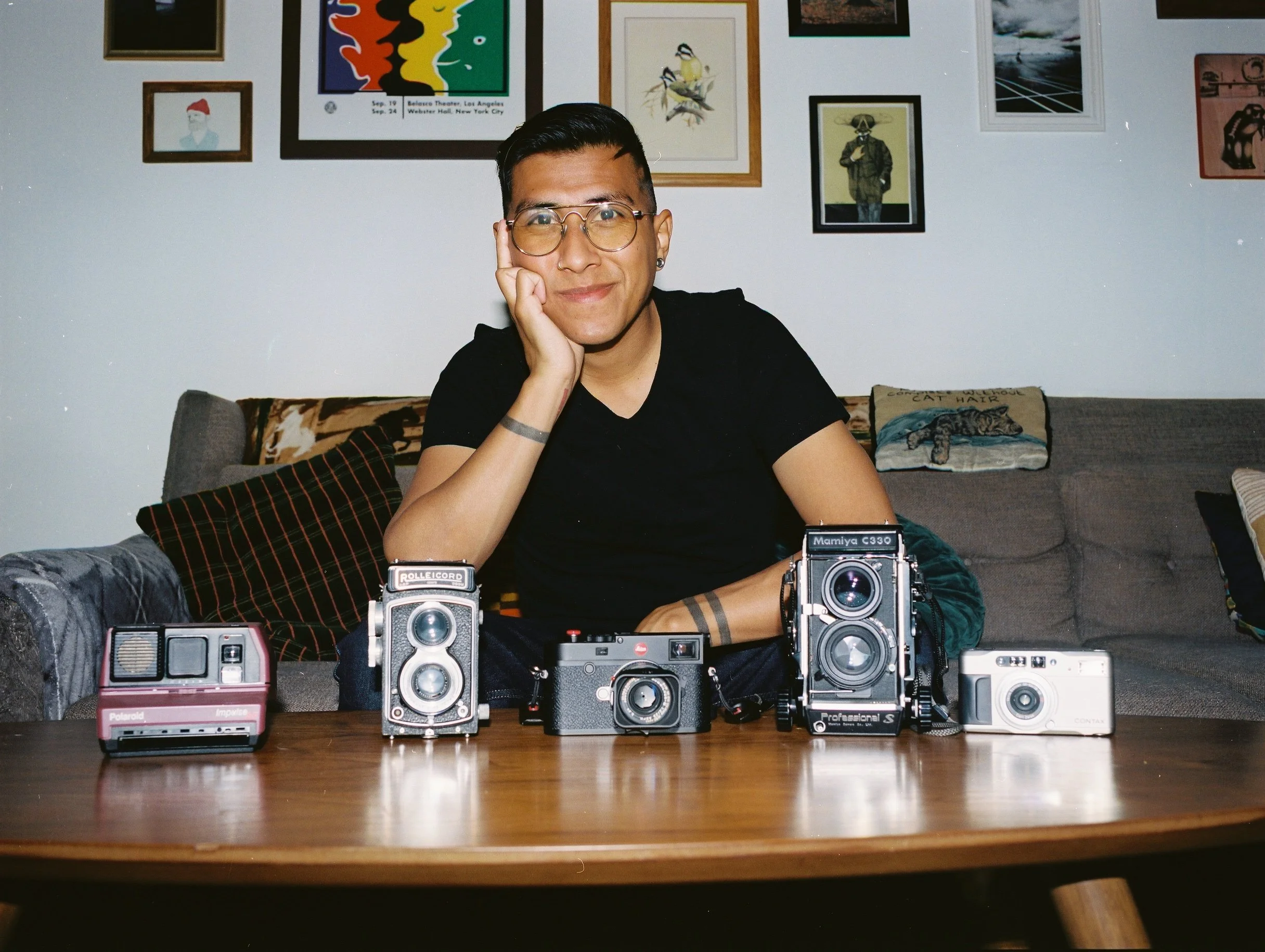
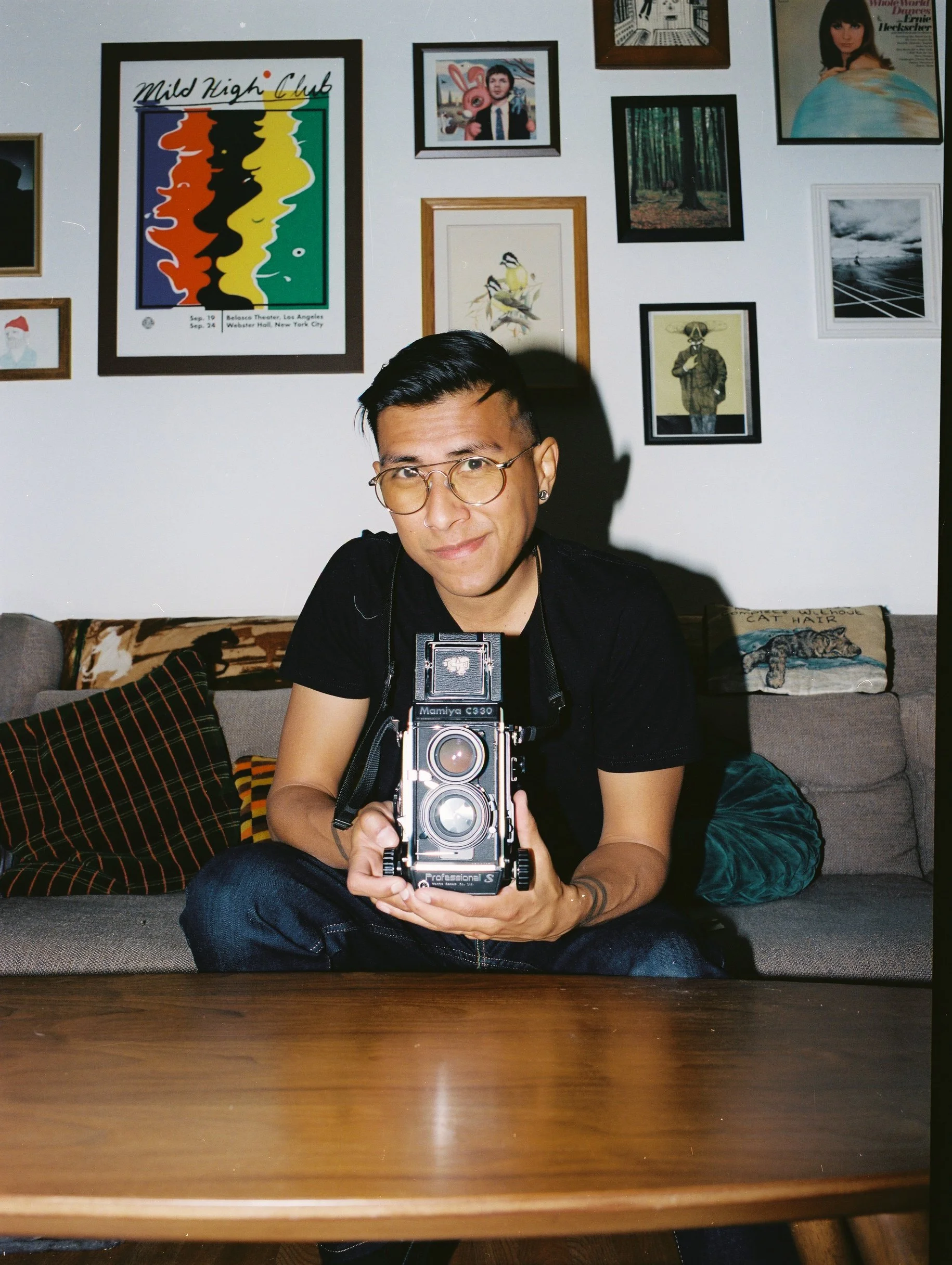
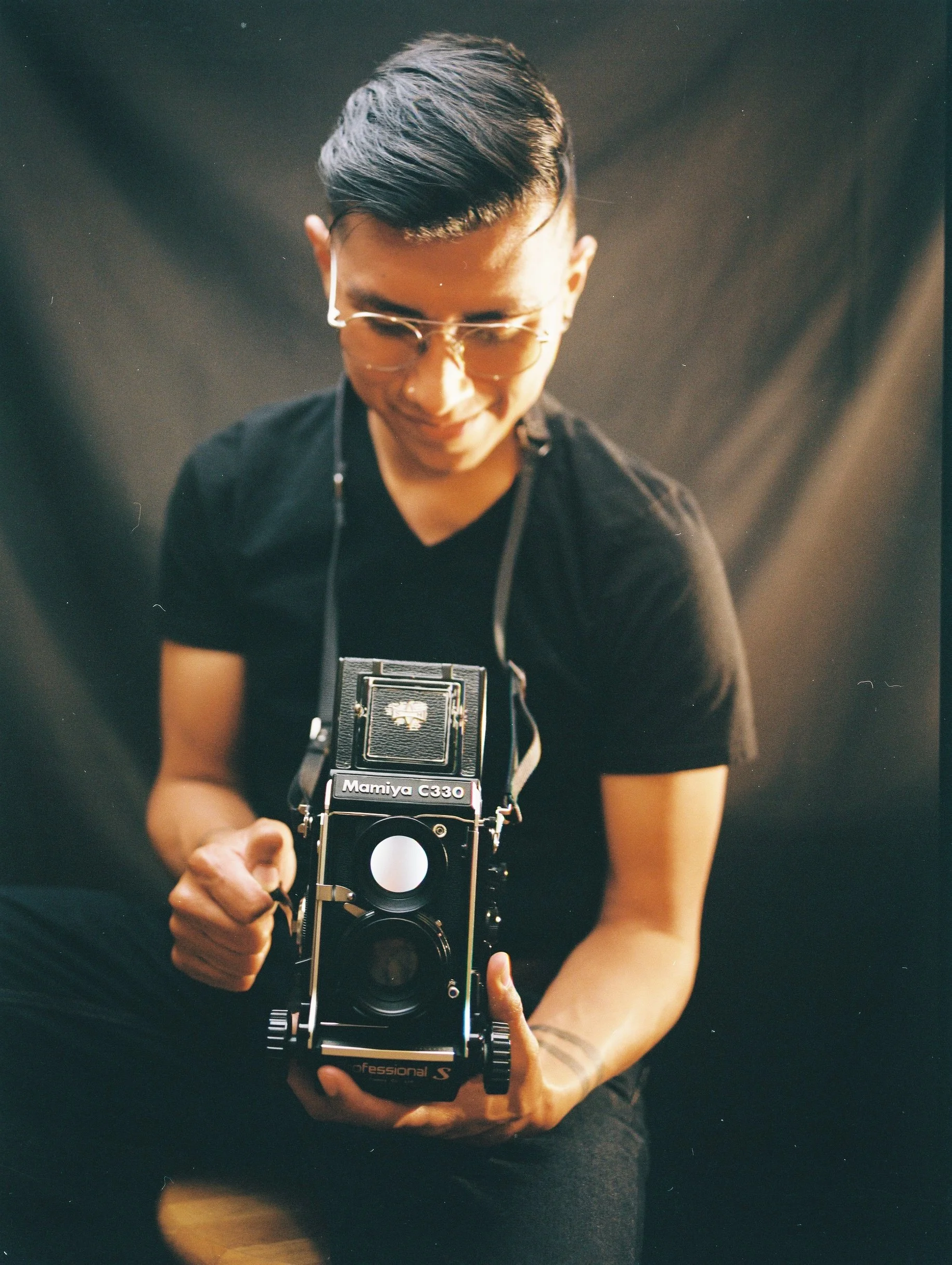
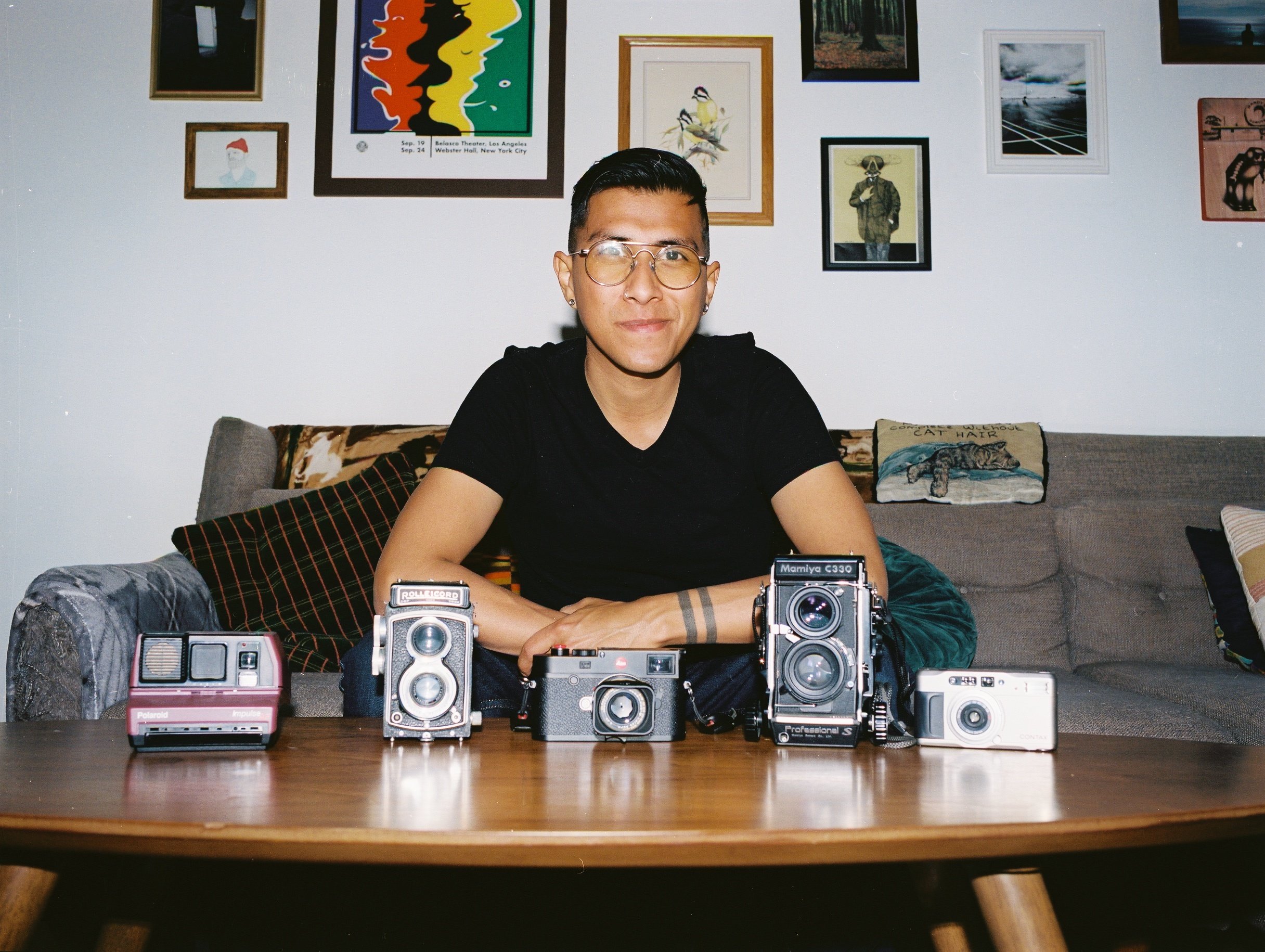
I was gifted a 6x6 medium format camera by my high school photo teacher. We were at the Getty and we were looking at a photo and I cried. A) My work is never going to look like this. B) I know this is film because it has a look, and none of my digital photos could touch this. C) I was crying because I was upset thinking that I’ve shot hundreds of thousands of digital photos and they still can’t touch this. Why? I was questioning everything, having an existential crisis. She [high school teacher] asked me, “Do you have a medium format camera that shoots film? I have one in storage; you can have it.” It belonged to her predecessor, so she calls him, and he goes, “Yeah, I’m not gonna use it, he can have it.” I get the call, I pick it up, and I can’t believe that it’s in my hands. That was the beginning of me deep diving into film on YouTube. That’s four years of mostly shooting film. With the same camera, I got to document the photo walk we went on. That was like the first time we ever hung out. I didn’t even know what I was doing then. I got to document my first time ever going to Japan with the same camera, and when I got back a month later, I met Kat, and I have been photographing her on film since we met. In my large body of film work, she’s in it. It was very bold of me to take her photo on film the first night I met her because it was our first date. We met on Bumble… When I found out she was into photography, I was like okaayyy, let’s shoot! We have been shooting film together since the beginning.
Now that you are officially married and have a fur baby, what is next?
We are still uncertain about when we can travel abroad. That’s something we want to do together. I want to share that experience with her. The main goal is that we are saving up so that we can get out of here, we want to make new memories and take more photos, and exist.
What advice do you have for those wanting to pursue a photography career?
The funny thing is that it has nothing to really do with photography. It’s literally the best piece of advice that I ever got. It was from my high school photo teacher.
Be humble. Nobody wants to work with an asshole.
What happened was that in high school, photography was the first thing I ever found that I was remotely good at, and my head exploded because I was getting praised and complimented, and I didn’t know how to deal with it. She noticed it, and she told me that, so I dialed it back a little bit.
I started going by an alias. I used to turn in work under my name and turn in work under 2071photo. Nobody knew who that was, but the cool thing was that I was getting extra credit for two separate assignments. I was making that much work. People would give me their honest opinion about that work because they didn’t know who it was, but they would praise my photos under my name all the time. So that’s kind of where that [2071photo] came from. It’s not so much that I don’t want to be known for my name, but I want my work to be known for itself, not the name attached to it. So that’s why I don’t attach my actual name to my work.
Teachers will notice before anyone else does - of your character - or potential friends you meet in the photography community. You, for instance, I noticed your character from the first time I met you. I asked you, ‘Hey, here is this camera, let me show you how to use it real quick, can you just film this while I photograph? Because I can’t do both.’ It was a performance, Cats Cradle, in the main gallery. You were so kind. The footage was great. Later, I found out you were into photography. I needed an assistant. I hired you, and from the beginning, I could tell you genuinely wanted to learn. You were hungry to learn, so I gave you as much time as I could give you and all the knowledge that I could share with you. So I think character is most important, and of course, you have to do it - you have to practice. You have to make mistakes. I liked that you didn’t know anything coming in because you didn’t have bad habits. The thing about character is… people that think they know everything when you try to teach them… [are not] open to learning new things. You were just open, so I didn’t mind investing the time it took to teach you from nothing, versus teaching somebody who thinks they know everything. You are still the best assistant I’ve ever had.
Instagram: @2071photo
[Interviewed on February 26th, 2022]
Photographs shot on Mamiya 645, Kodak Portra 400