Studio Mestiza Turns Four!
A telling of our origin story and a soft launch of our Spring Ceramics Collection
I remember it like it was yesterday. I had moved back home to the Bay Area after being away for six years in Los Angeles, nearing the end of the pandemic era. I had graduated the year before the pandemic hit, which arguably was worse than being a student during that time, as that meant that I had empty promises of finding a big girl job after graduation.
During that time, I was big on the Zero Waste movement, as one inevitably picks up from LA culture. I’m talking about the rise and fall of the mason jar as a trash jar, coined by Lauren Singer, reducing one’s waste down to what could only fit in the jar. Zero waste is a habit I continue to practice to this day, just not so intensely. I call my practice a low-waste lifestyle that aims at reducing waste, specifically plastic from packaging. The territory that comes with this lifestyle is sustainability, which at one point was the key term for referencing how much one cares about the planet, but after overuse and greenwashing by big box businesses, sustainability was no longer enough.
Those first few months of returning home felt like a mourning period for me. It was the death of the zero-waste movement, the death of my image as a student, the death of my dance company dream, and the death of La La Land. This false sense of identity, I thought, was very much real at the time, quickly became an illusion. I no longer knew who I was or what I wanted anymore. One thing was certain: my values remained the same, so I leaned on what felt right to me. As the world was starting to reopen and slowly find a pace of normalcy again, so did my inner compass.
My low-waste journey made me want to do things that connected me to the earth, slowed me down, and taught me how to be self-sufficient. I was curious about gardening, growing my own food and medicine, and composting. Ohhh, composting, the ultimate form of the low-waste lifestyle. Soil Kings and Queens will tell you that a huge key to developing our planetary health is through composting waste and topsoil building, a closed loop of regeneration that piqued my curiosity into learning about renewable resources. The next day was about pollinators and the hidden work they do for our food system. Then the day after that was about clean ingredients in skincare and wanting to learn about the products that I use daily. I was hungry for information. One topic led me to another. It was many books and YouTube videos later until finally, I decided to create my very own lotion bar. This very lotion bar, though I didn’t know it at the time, was the start of Studio Mestiza.
Why a lotion bar, you may ask? It only required three natural ingredients, was a solid that could be traveled with, and it didn’t require any wasteful packaging. After my first successful batch, I fell in love with the idea of making my own products simply because I get to decide what ingredients go on my body, and because the act of learning how to make things that most people didn’t know how to make for themselves intrigued me. There are so many forgotten skills and lost art forms, such as traditional candle dipping, bookbinding, and soap making, which I later picked up. My love and curiosity for art, creation, and the earth pushed me to want to share my lotion bars with the world, so I did.
There was no official start date for Studio Mestiza, except for what I could recall was the very first pop-up market in which I officially sold my first bar in person. It was the start of May 2022 with no official Doing-Business-As name. Taking inspiration from my love of dance, the bee-themed hexagon mold for the lotion bars, and the act of melting ingredients together on my stove top (the primary one being beeswax), I decided to name my business Dancing Bee Blends. Some of my very first customers will remember this DBA, which is nostalgic to me, and the beginning of my small business ventures selling small batch soaps and salves with botanicals grown in my own garden.
My business name was officially changed to Studio Mestiza the following year as I started to develop what the future of my business would look like. It was clear to me that this passion project of mine, as much as it was about the product, was just as much about the story behind it. I had built something for myself that was becoming bigger than me. It felt too big to say at the time, but three years later, I can confidently say that Studio Mestiza has become a lifelong purpose. It has evolved from a small business or personal brand that has taken shape into an ecosystem of creation, community, and collaboration, especially through the birth of The Meadowsweet Journal.
The Meadowsweet Journal, a publication by Studio Mestiza, is a place where I can have the security of writing under a pseudonym or a nom de plume that allows me to explore my thoughts and creativity without preconceived notions of who I am. I don’t have to be the main character of the show, and yet still have full control. That’s not to say that I won’t share my own experience from time to time, as I’m doing right now, but I have the choice to decide what remains private, only for me, and what I choose to publish into the world. The Influential and Inspiring People Series, also known as IIP, is an interview series that allows for others’ stories and experiences to shine in the light, allowing multiple points of view and diverse voices to round out the words of The Meadowsweet Journal.
From feeling lost to making a lotion bar, and the beginnings of a small business, to a publication, this year, I have something new up my sleeve. Apart from writing, I’ve been working on a ceramics collection of altars. Though I have put out a few of my ceramics pieces over the years, this would be the first time creating a cohesive and intentional collection.
As an artist, I am aware that by selling my pieces, I create with the thought that I will be handing them off to someone else in the future. This process of making only to let go has been quite liberating, but can also be daunting when thinking of the many hours spent together with my beloved pieces as I become bonded and increasingly attached. Each piece is like a child that I created, nurtured, and embellished to hand off to someone in hopes that they will care for it as much as I do.
I will be selling my ceramics collection at my first in-person pop-up of the year on Sunday, May 3rd, at the San Mateo Garden Center, and to celebrate four years of Studio Mestiza, I have also listed my pieces on my online shop.
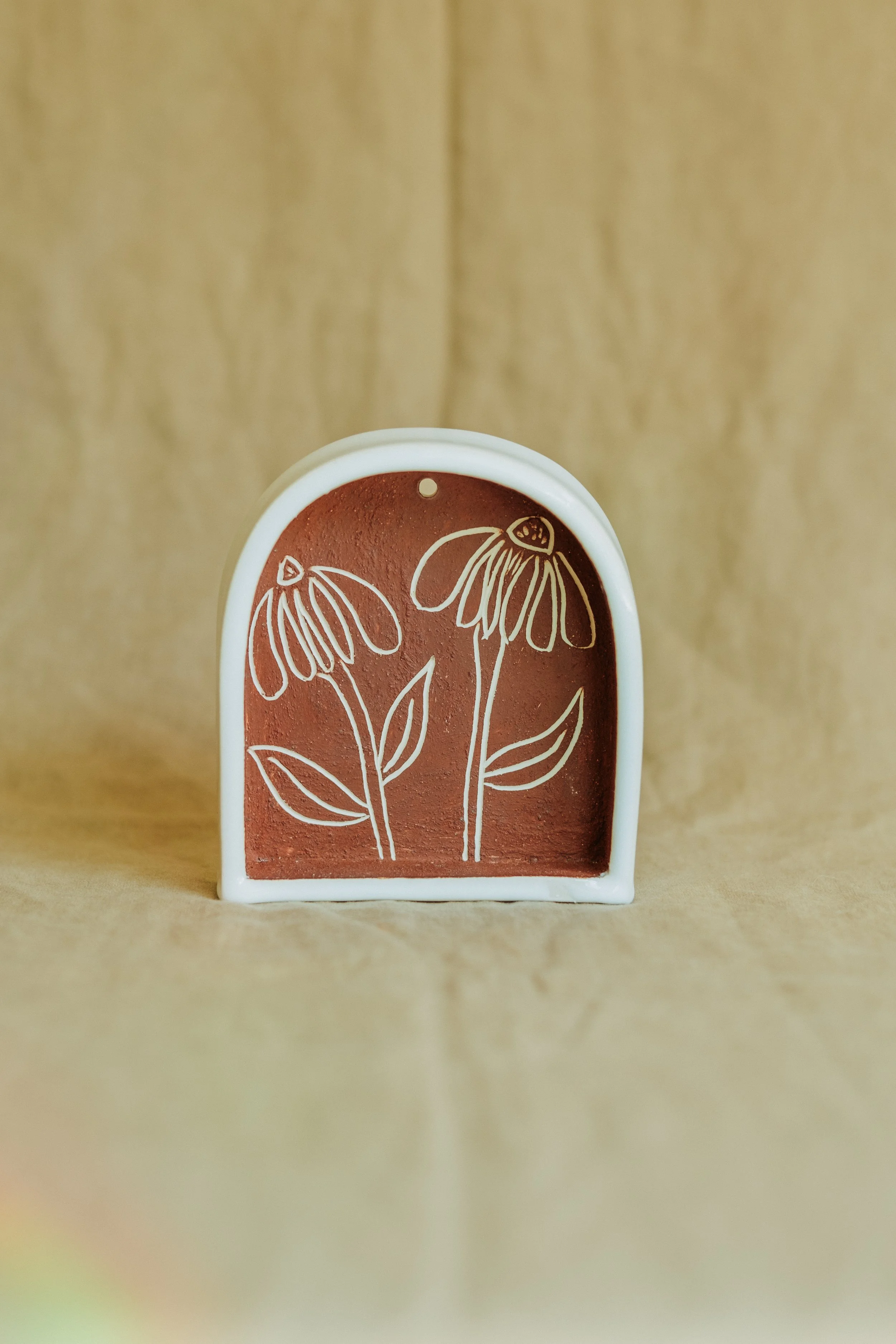
Ceramic Altars:
An altar is a home for cherished objects offering remembrance, reflection, and intention during those quiet moments. In Mexico, we set up ofrendas to honor the legacy of loved ones who have passed, especially during Día de los Muertos. Though you may not know it, a cozy knook, a nightstand, or your vanity counter could all be your own representation of an altar. Altars are adorned with purposeful sensory items to create a sacred space that honors your own belief system and holds spiritual significance to you. Suggested offerings include candles, family heirlooms, books, stones, crystals, photos, flowers, plants, aromatic spices, and incense.
There’s one piece in particular that I made for myself with no intention of ever giving away. I think it’s important, as artists, to always leave room for priceless items that are gifted from ourselves to ourselves as a reminder that we can still enjoy our own art and be intentional about what we choose to keep. Made with Terra Red clay, the vase features four different native plants to Mexico that have great meaning to my culture and my love of nature. The plants are Cempasúchil (Mexican Marigold), Nopal (Opuntia Cactus), Tithonia (Mexican Sunflower), and Amaranto (Amaranth).
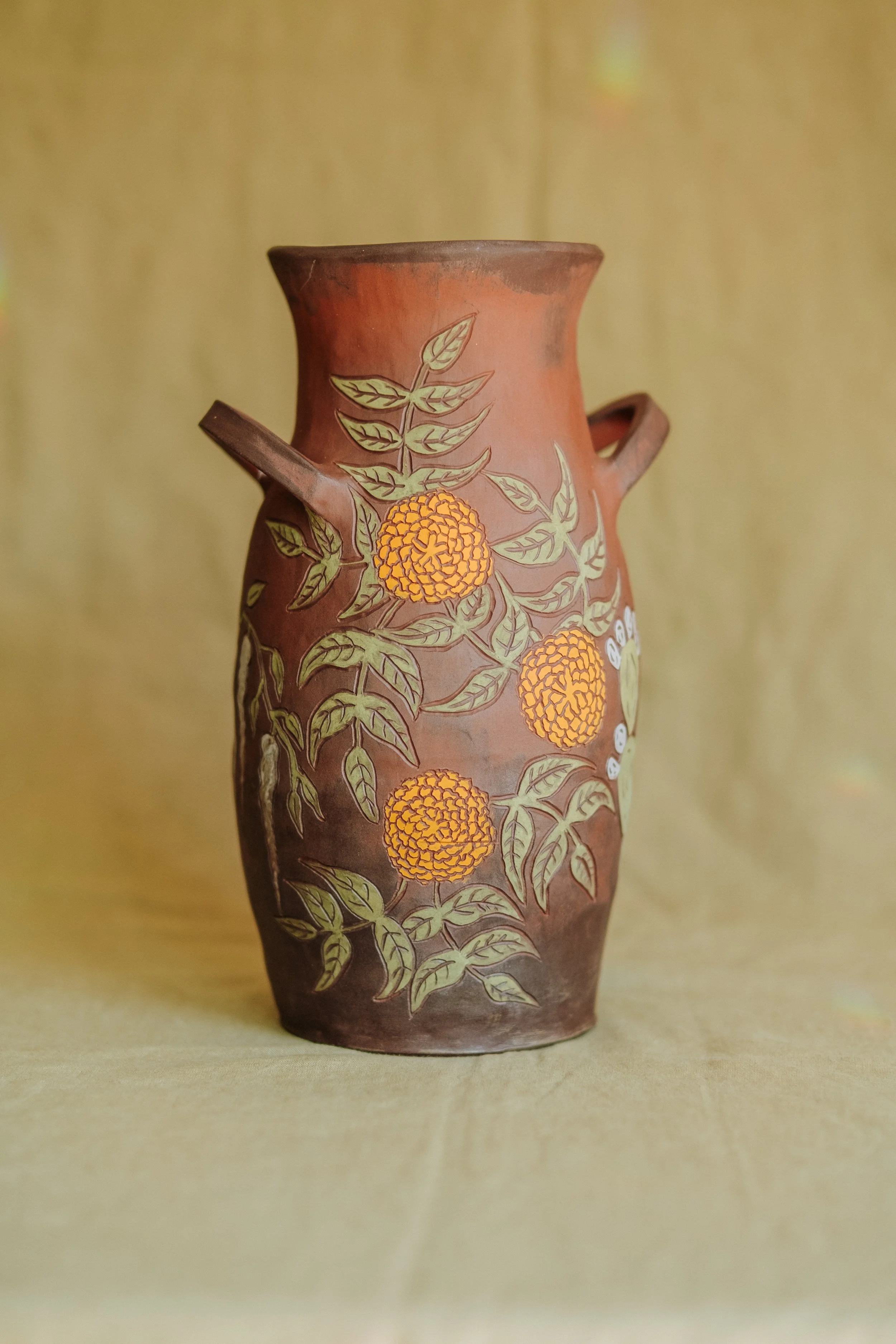
This hand-coiled vase will be on display at my pop-up on 5/3/26 if you wish to see it in person, along with all my other offerings.
Thank you for four incredible years! Here’s to many more. Cheers!
-Lizzy